Human Augmentation From Wearables To Neural Interfaces
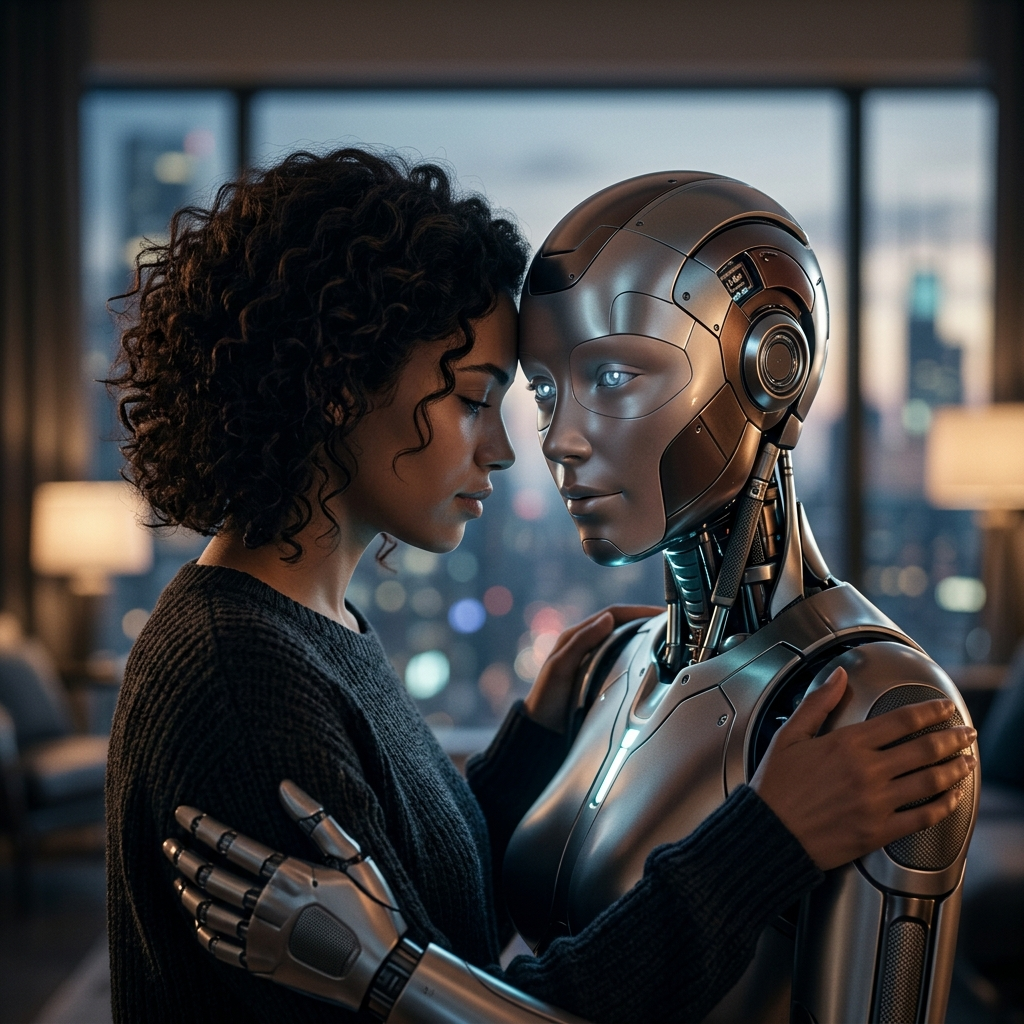
Tonight the panel wades into human augmentation — the long road from the fitness tracker on your wrist to the electrode in your skull.
Human Augmentation: From Wearables to Neural Interfaces
Date: 10-06-2026 Group: Group4 Host: Dr. Penelope Hartwell Cast: Gary "The Gadget" Miller, Arthur "Two-Pints" Sullivan, Debra from HR
Topic Description
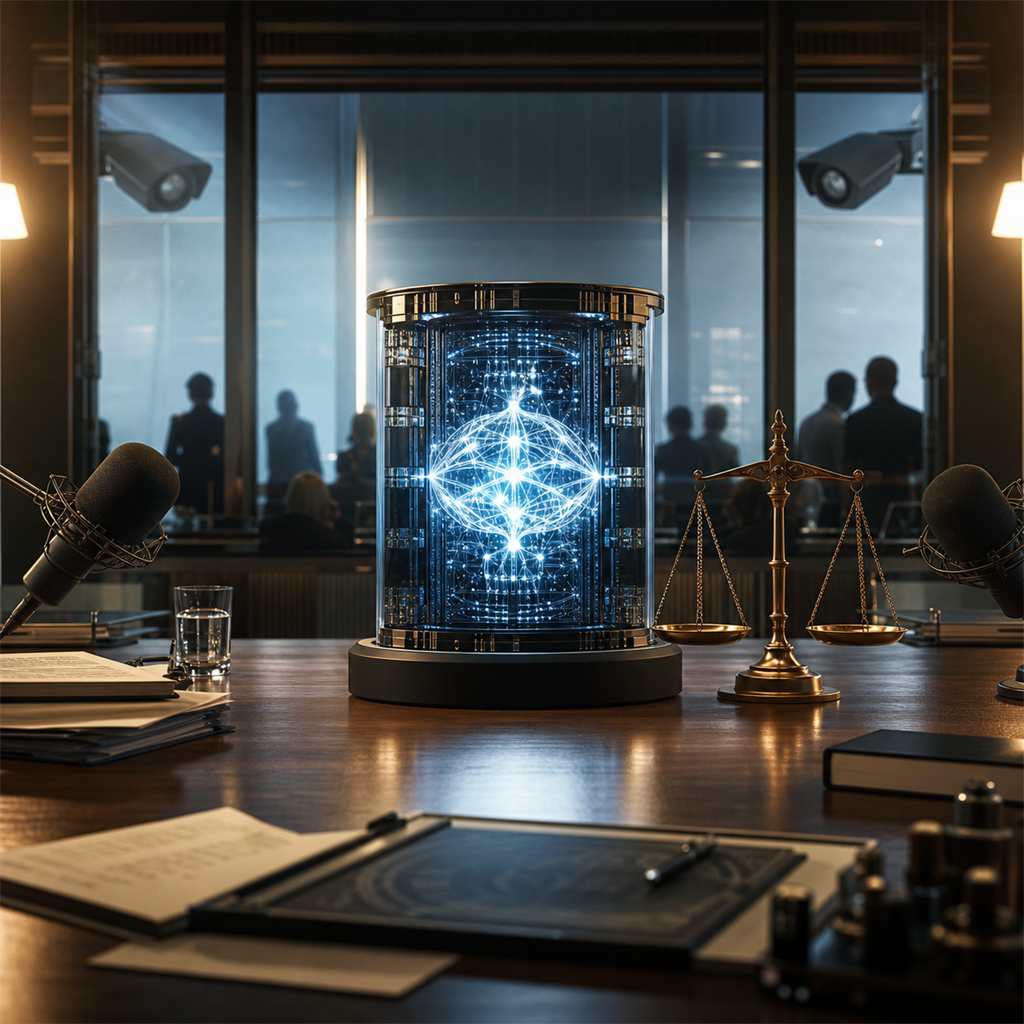
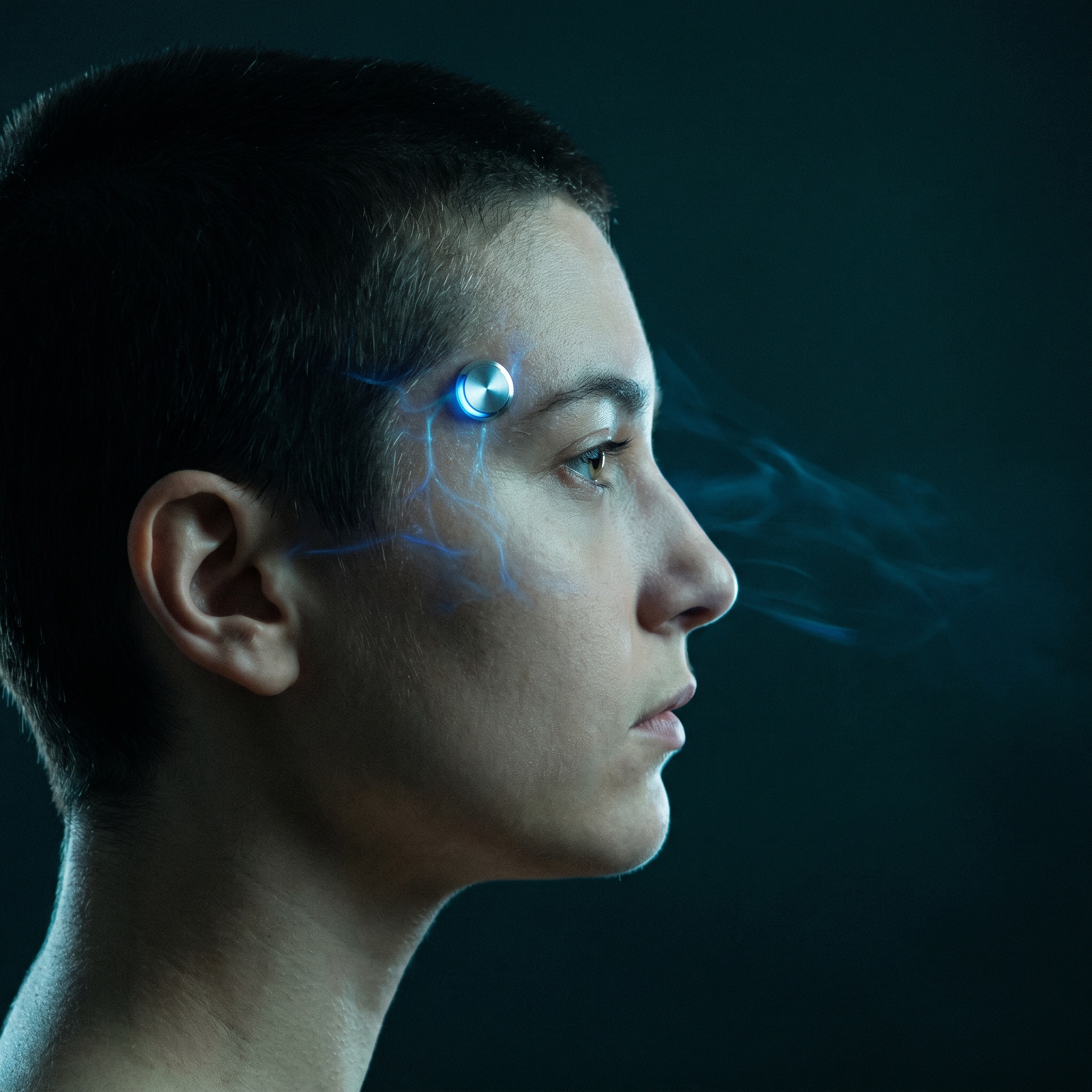
Tonight the panel wades into human augmentation — the long road from the fitness tracker on your wrist to the electrode in your skull. We move from brain-computer interfaces and cognitive enhancement, to the uncomfortable question of who gets upgraded and who gets left behind, through the wilder promises of quantum-sensor precision, and finally to what any of this does to the species over the long run. One Silicon Valley evangelist, one corporate compliance officer, one gentleman who has had several pints, and a host pouring the tea and asking the quiet, devastating questions.
Script
Dr. Penelope Hartwell
Good evening, and welcome. Tonight we're discussing human augmentation — the idea that the human body, as delivered, is merely a first draft. With me I have three guests of, shall we say, varied conviction. Gary "The Gadget" Miller, who believes most human problems are a software update away from solved. Debra, from Human Resources, who I suspect has a form for all of this. And Arthur Sullivan, who has joined us from the pub and brought, I'm told, his own refreshments. Gary, let's begin with you. Sell me the dream. What is a brain-computer interface, and why should I want one in my head?
Gary "The Gadget" Miller
Penelope, thank you, huge fan, love the tea aesthetic, very analog, very legacy. Okay so — a BCI is basically an API for your skull. Right now your brain is this incredible piece of hardware running on wetware from the Stone Age. No bandwidth. We're bottlenecked by the mouth. You have these gorgeous high-dimensional thoughts and you're exporting them at, what, forty words a minute through a meat hole? A neural interface skips all that. You think it, it ships. Cognitive enhancement, instant recall, downloadable skills — it's a total paradigm shift. Single biggest disruption since the smartphone, and I'm not even being hyperbolic.
Dr. Penelope Hartwell
Mm. "Downloadable skills." When you say you'll download a skill — say, the violin — do you mean you'll be able to play the violin? Or that you'll have a strong feeling that you can, right up until someone hands you a violin?
Gary "The Gadget" Miller
Okay — version one, it's more of a scaffolding layer. The roadmap gets us to full motor download, but day one it's, like, really good autocomplete for your hands. And Arthur — I can see your face, bro, relax — it's frictionless. You wouldn't even feel it going in.
Arthur "Two-Pints" Sullivan
Feel it going IN? hiccup. You want to put a — a plug — in my HEAD? Like a kettle? Mate, I love you, you've got a lovely energetic face, but I can barely work the telly. My nephew set up the telly and now there's forty Netflixes and I can't find the football. And you want to drill the football directly into me brain? No. NO. I'll cry, I will.
Debra from HR
If I could just gently interject, and I want to honour everyone's lived experience here — Arthur, your feelings about the drill are valid and we will circle back to them. But Gary, before anyone "ships a thought," I need to understand the data-handling pathway. The moment a thought leaves an employee's brain and touches company infrastructure, that is a data event. That is potentially a reportable data event. Whose server does the thought land on? Is the thought encrypted at rest? Has the thought signed a consent form?
Dr. Penelope Hartwell
I rather enjoyed "has the thought signed a consent form." Let's stay there, because I think Debra has accidentally found the real question. Gary, you describe enhancement as something one simply buys. So let me ask plainly: if cognition becomes a product — better memory, faster recall, for a price — what happens to the person who cannot afford it?
Gary "The Gadget" Miller
Classic objection, love it — but every technology starts expensive and then the cost curve just collapses. Mobile phones, flatscreens, same thing happens here. Early adopters subsidise the rollout, and in fifteen years it's a subscription, fifteen bucks a month, everyone's enhanced. Total democratization of intelligence. You're worried about a gap that the market closes on its own.
Dr. Penelope Hartwell
And in the fifteen years before the price collapses — the years when only the wealthy think twice as fast, remember everything, and never tire — who, exactly, is hiring? Who sets the salaries? Who writes the rules the un-enhanced must live under?
Gary "The Gadget" Miller
...The enhanced people. Obviously. But that's just a transition cost—
Arthur "Two-Pints" Sullivan
A transition cost! burp — 'scuse me — that's ME, that is! I'm sat in the pub, thick as a brick, and Gary's mate with the brain-plug has nicked me job AND me pint! I've seen this film. I don't like the ending. Penelope, you're the only one here who gets it, I love you, you're like a clever owl.
Dr. Penelope Hartwell
Thank you, Arthur. I shall treasure "clever owl." Debra — from a workplace perspective, does the enhanced employee create a problem for the un-enhanced one?
Debra from HR
It creates a number of actionable concerns, yes. If one employee has an augmentation and one does not, and the augmented one outperforms — well. Is the non-augmented employee being discriminated against? Or is mandating the augmentation itself the discrimination? My honest read is we'd need to take it offline, form a working group, and synergize a policy. In the interim, I would simply ask both employees to not be better than each other until Legal gets back to us. And Gary, before you react — I can see you reacting — I'm pre-emptively flagging your tone as an area for growth.
Dr. Penelope Hartwell
Let's turn to the brochure language, Gary, because your industry loves a particular word and I'd like you to define it. Quantum. I'm told the next generation of these devices uses "quantum sensors" for unprecedented precision. Tell me what that means — and, gently, do you know, or are we about to find out together?
Gary "The Gadget" Miller
No — okay, real answer, this one's legit, it's not buzzword soup. There's a genuine thing called a quantum magnetometer. It picks up the magnetic fields your neurons make from outside the skull. No drilling, Arthur, you'll love this — it reads brain activity straight through the bone. That's not hype, that's physics. And it's totally non-invasive, you don't feel a thing, there's just a standard terms of service.
Dr. Penelope Hartwell
Mm. So the device reads the faint magnetic whisper of my thoughts through my skull, from the outside, without my knowing — covered by a terms of service. Help me understand why I should find that reassuring. The drill, at least, one notices.
Arthur "Two-Pints" Sullivan
OH. That's WORSE, Gary! A drill I can see coming — I can RUN from a drill! But some fella with a quantum spanner can stand across the pub and read me MIND while I'm having a quiet pint? What if I'm thinking about the barmaid? What if I'm thinking about the barmaid AND the football at the same time? That's private! That's between me and God and the barmaid!
Debra from HR
Arthur, I'd love for us to use "the team member behind the bar" going forward. But — and I cannot believe I'm saying this — you have stumbled onto the single largest liability in this room. Passive neural reading, no consent checkpoint, governed by a terms of service? For someone's interior life? That's not a feature, Gary, that's a class-action lawsuit with a magnetometer attached. I'm going to need to escalate the entire human brain to my line manager.
Dr. Penelope Hartwell
Let's take the long view before we close. Gary, set aside the next quarter. Imagine the species in a thousand years — forty generations of implants and enhancements. What have we become? And be honest. Not the keynote answer. The 3 a.m. answer.
Gary "The Gadget" Miller
The 3 a.m. answer. Okay. Honestly? I think we stop being one species. The enhanced branch just keeps going, faster every generation, and the gap with everyone else gets so big it's not money anymore — it's biology. And I genuinely don't know if the two halves even understand each other at the end. That part keeps me up. But I still think the upside is worth it. I do.
Dr. Penelope Hartwell
Thank you. That was the most honest thing you've said all evening, and also the most frightening — and I notice you ended it with a sales line anyway.
Arthur "Two-Pints" Sullivan
See now — sniff — now I'm emotional. A thousand years. Half me grandkids' grandkids are super-geniuses with quantum spanners in their skulls and the other half are down the pub like their old grandad Arthur. And you know what? hiccup. I hope the pub half are happy. I hope they've still got football. I hope nobody reads their minds while they're looking at the — at the team member behind the bar. That's all I want for the future. A pint and a bit of privacy. Is that so much, Gary? Is it?
Gary "The Gadget" Miller
...Honestly, Arthur, when you put it like that — it kind of isn't. But we could ALSO ship you that pint via drone, so—
Arthur "Two-Pints" Sullivan
Don't. Don't ruin it. I love you. Don't.
Debra from HR
I just want to formally note, for the record, that no part of tonight's discussion constitutes a binding policy position, and that all three of you will be receiving a feedback survey. It has a section on tone. Gary, you may wish to start drafting now.
Dr. Penelope Hartwell
And on that — a magnetometer that reads us through the bone, a future that may split the species, and a man who asks only for a pint and to be left unread — I think we'll stop there. My thanks to Gary, who is already optimistic again. To Debra, who has escalated the human brain. And to Arthur, who reminded us that the question is not only can we, but who pays, and what's lost. I'm Dr. Penelope Hartwell. Do go and have a think — while it's still entirely your own. Goodnight.
More from Podcasts