The $1.75 Billion Bet That Lasted Six Months
In 2018, two of Hollywood's most powerful executives sat down to reinvent television. Jeffrey Katzenberg, the man who built DreamWorks Animation. Meg Whitman, the former CEO of eBay and Hewlett Packard Enterprise. Their pitch was simple: prestige TV, chopped into five-to-ten-minute chunks, watched on your phone during your commute.
The $1.75 Billion Bet That Lasted Six Months
Category: Failed Startups Topic: Quibi Length: 133 seconds (~354 words) Read by: voiceover narrator (third person)
In 2018, two of Hollywood's most powerful executives sat down to reinvent television. Jeffrey Katzenberg, the man who built DreamWorks Animation. Meg Whitman, the former CEO of eBay and Hewlett Packard Enterprise. Their pitch was simple: prestige TV, chopped into five-to-ten-minute chunks, watched on your phone during your commute.
They called it Quibi. Short for quick bites.
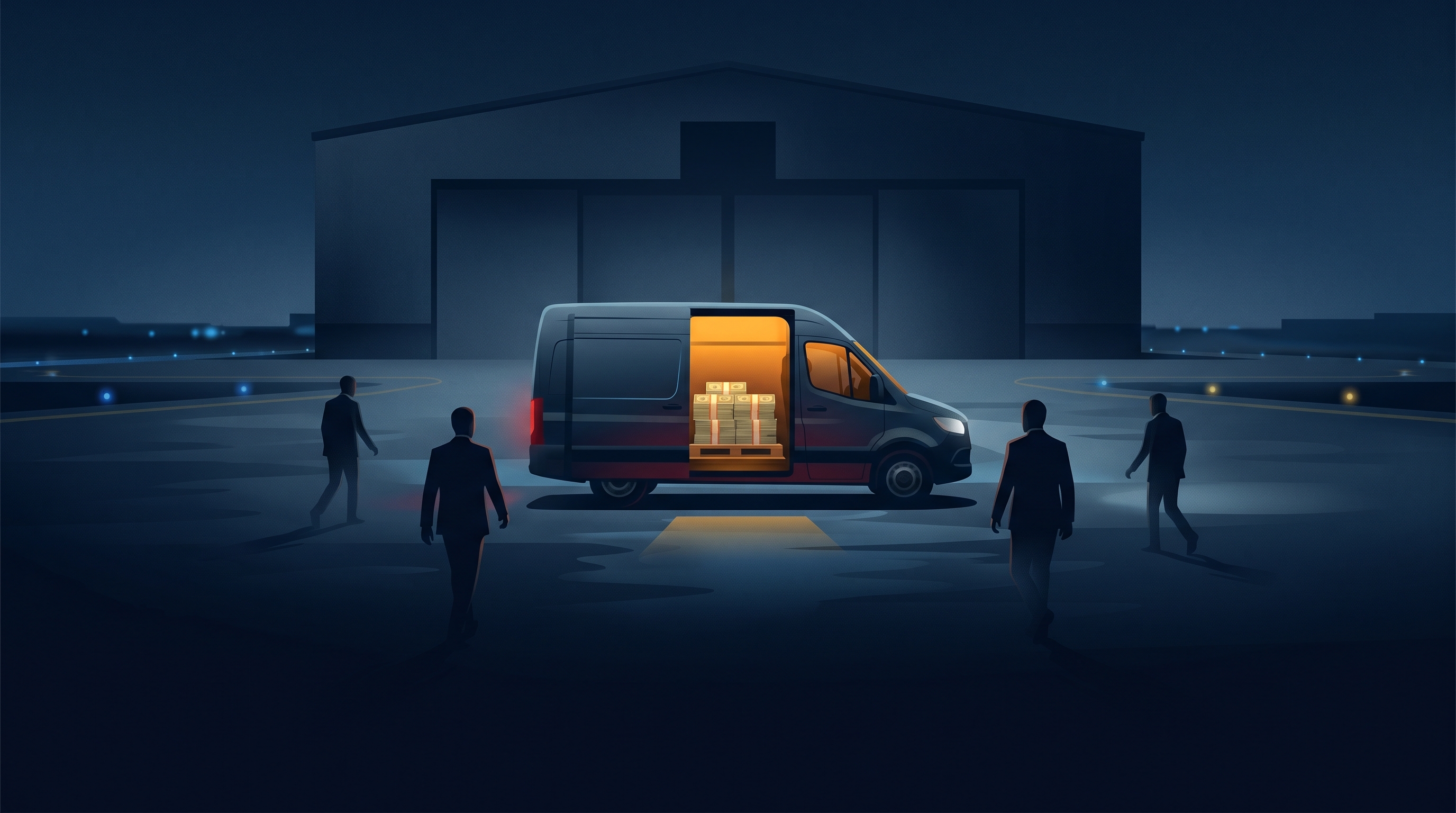
Before the app even launched, they raised one billion, seven hundred and fifty million dollars. The check writers included Disney, Sony, NBCUniversal, Alibaba, and Goldman Sachs. The money went to stars. Chrissy Teigen got a courtroom show. Sophie Turner got a post-plane-crash thriller. Liam Hemsworth got hunted for sport in a series called Most Dangerous Game.
Quibi's centerpiece was a feature called Turnstyle. Rotate your phone, and the video reframed itself in real time — landscape to portrait, portrait to landscape, without a beat dropped. The tech was so distinctive that a company called Eko sued Quibi over it just weeks before launch, claiming Quibi had ripped off its patent.
Then April 6, 2020 arrived.
Quibi went live on the exact day the world locked down. The commute it was built for no longer existed. People were stuck on couches with sixty-five-inch televisions — and Quibi refused to let them cast to a TV. Not at launch. Not when it mattered. Worse, you couldn't share clips on social media. A platform built for the TikTok generation forbid the one thing TikTok ran on.
The reviews shrugged. Subscribers didn't show. Ten Emmy nominations and two trophies for a Laurence Fishburne drama called FreeRayshawn moved nothing.
Six months and fifteen days after launch, on October 21, 2020, Katzenberg called his investors and told them the company was over. He blamed the pandemic. He blamed the product. In a farewell letter he wrote that the idea wasn't strong enough on its own.
In January 2021, Roku scooped up Quibi's entire seventy-five-show library — Hemsworth, Teigen, Turner and all — for less than one hundred million dollars.
Today, you can watch every Quibi show for free. With ads. On a TV.
Sources
- Quibi: shortform streaming service to shut down after six months (The Guardian)
- Quibi, Short-Form Streaming Service, Quickly Shuts Down (The New York Times)
- Quibi is already locked in a legal battle over its rotating video tech (The Verge)
- Roku Acquires Quibi Shows, Will Stream More Than 75 for Free (Variety)
Direction notes
Direction Notes — The $1.75 Billion Bet That Lasted Six Months
Tone
Dry, deadpan, with a slight smirk at the absurdity. The story is already a punchline — let the facts swing themselves. No outrage, no mockery. Treat the numbers as set-ups, the dates as pivots, and the kicker as a quiet exhale.
Pacing
- Target run time: 133 seconds
- Reading speed: ~160 wpm; slow to ~130 wpm on the kicker
- Beats / pauses:
- Half-beat before "They called it Quibi."
- Hard pause after "Then April 6, 2020 arrived." — let the date land alone.
- Tight back-to-back delivery on "Not at launch. Not when it mattered."
- Long pause before the kicker: "Today, you can watch every Quibi show for free."
Emphasis cues
- $1.75 billion — anchor the size; the viewer should feel the weight before knowing what for.
- April 6, 2020 — punchline of the first act; the date the world locked down.
- TikTok — counterweight; explains why the product was already dead.
- six months and fifteen days — make the brevity hit.
- for free. With ads. On a TV. — staccato; each clause its own beat.
B-roll / visual hooks (optional)
- Empty commuter train footage, spring 2020.
- Close-up of a hand rotating a phone, with mocked-up generic player frames swapping orientation (no Quibi brand).
- Cash-stack motif or investor logo wall when "$1.75 billion" lands.
- Pandemic-era empty city street.
- Blurred newspaper headlines from October 21, 2020 (no logos visible).
- Final shot: a TV set glowing in a dark living room.
Music / SFX (optional)
Light cinematic piano under the setup. Drop the music at "Then April 6, 2020 arrived." Re-enter with a faint ticking-clock or muted vinyl crackle under the lockdown beat. Soft ambient pad returns on the kicker, fading to silence on "On a TV."
Provenance
Metadata — The $1.75 Billion Bet That Lasted Six Months
- Category: failed-startups
- Topic slug: quibi-six-month-collapse
- Date: 2026-05-10
- Generated by: Claude Code (
script/categories/audio/voiceover-script-generator/) - Workflow prompt:
My-Library/Content/Voiceover-Scripts/Prompts/generate-voiceover-script.md - Word count: 354
- Estimated read time: 133 seconds at ~160 wpm
- Research tool: serper MCP
- Cover image model: nanobanana (Gemini 3.1 Flash Image, nb2 tier, 2k, 16:9)
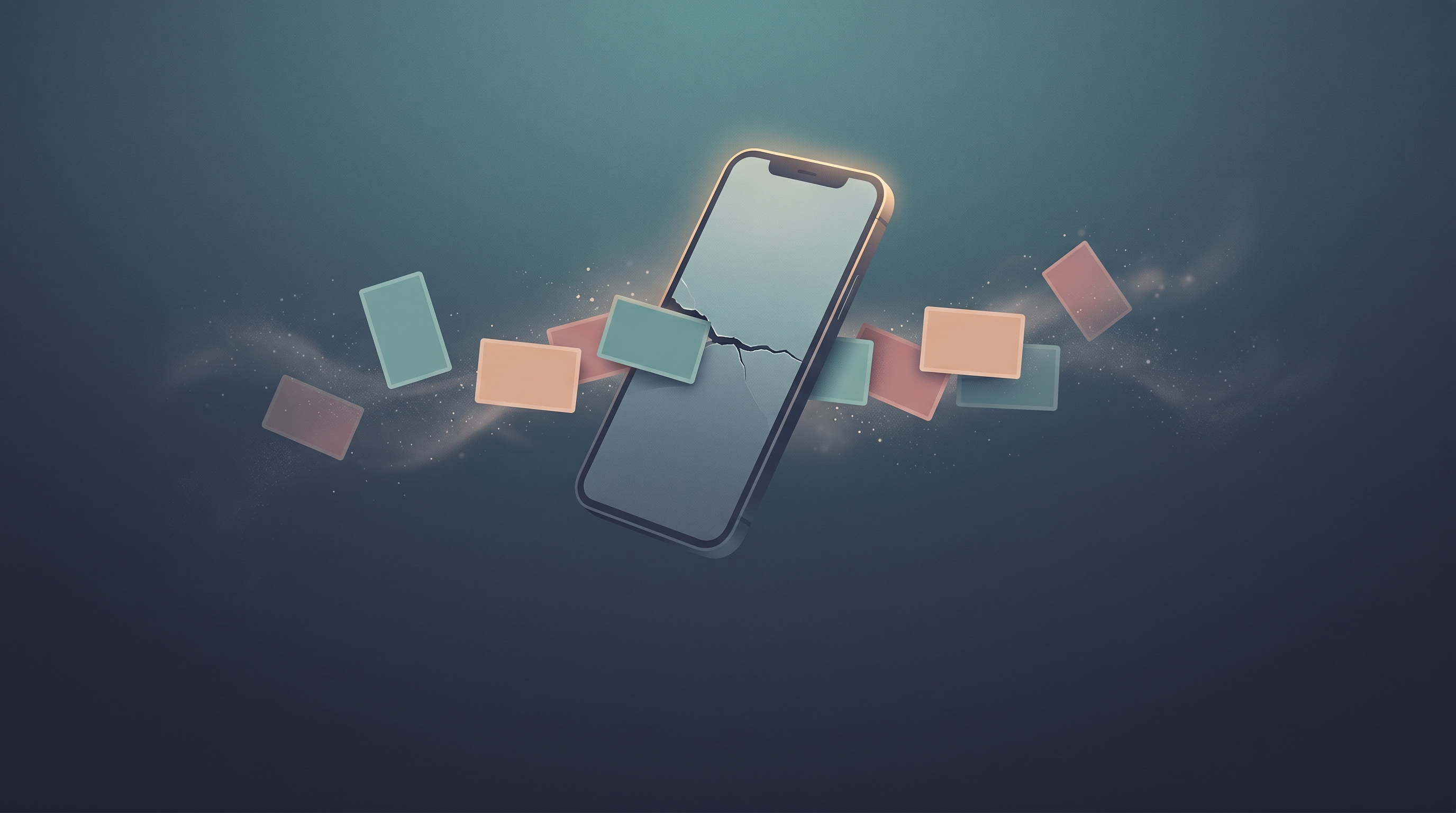
- Cover image prompt: Cracked smartphone tilted in twilight, pastel video-frame rectangles drifting from the crack as particles of light, muted teal / dusty peach / dusty rose / deep slate palette, modern editorial-tech illustration, no text, no UI, no faces, no logos.
- Sources:
- https://www.theguardian.com/culture/2020/oct/21/quibi-shut-down-jeffrey-katzenberg-meg-whitman
- https://www.nytimes.com/2020/10/21/business/media/quibi-shutting-down.html
- https://www.theverge.com/2020/3/11/21173981/quibi-eko-lawsuit-turnstyle-technology-jeffrey-katzenberg-streaming-interactive
- https://variety.com/2021/digital/news/roku-acquires-quibi-shows-free-streaming-1234881238/
More from Short Video Voiceovers