MCP Protocol News - June 6, 2026
Model Context Protocol ecosystem developments and integration signals.

MCP Protocol News - June 6, 2026
Week of: June 6, 2026
Overview
Model Context Protocol ecosystem developments and integration signals.
Stories
1. MCP continues consolidating as the connector standard for AI agents
Source: Model Context Protocol Docs Link: https://modelcontextprotocol.io/
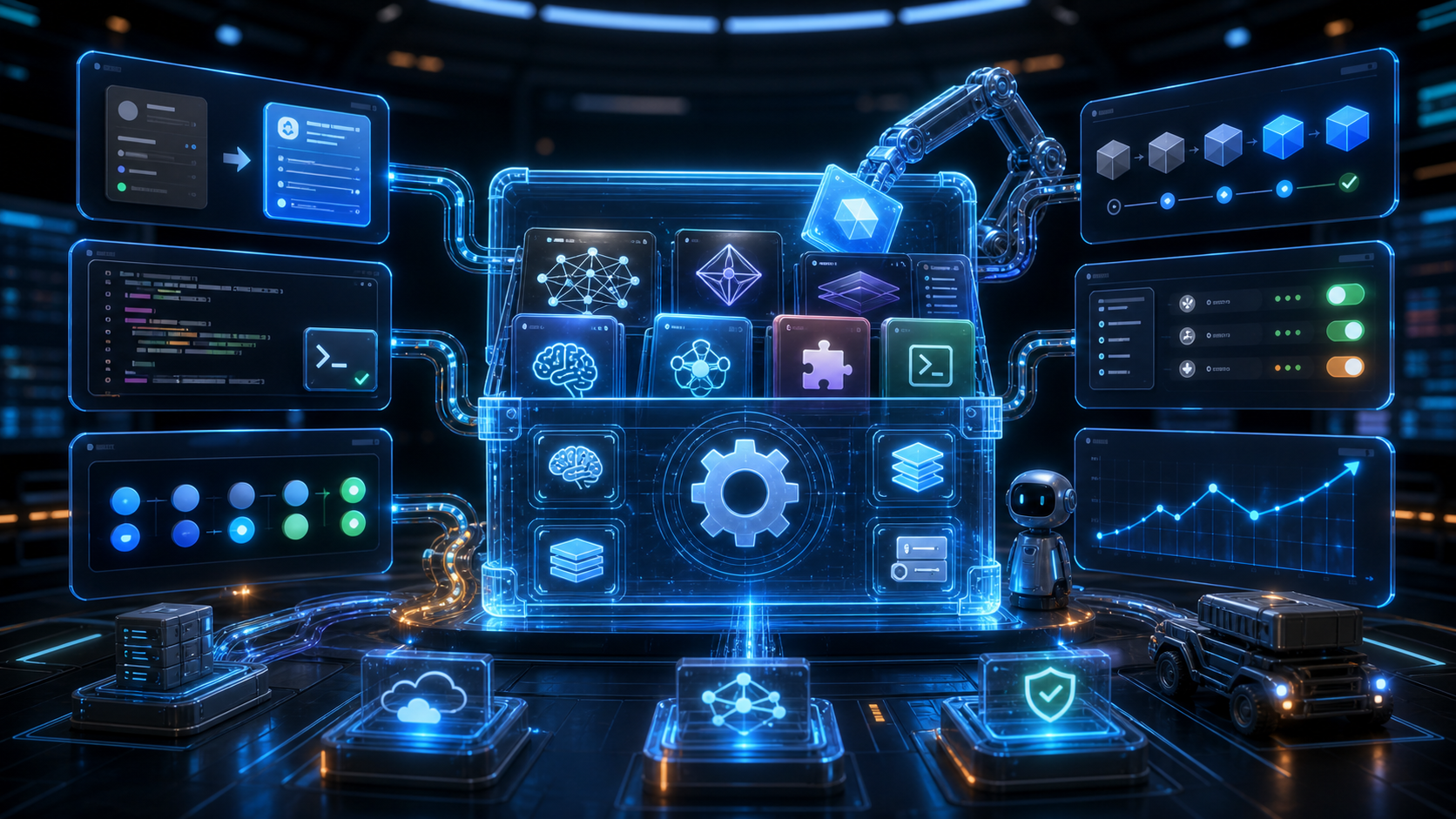
The Model Context Protocol ecosystem continues to gather attention because it gives AI applications a common way to expose tools, resources, and prompts. Its central value is reducing the custom integration work required for each assistant or agent product.
For teams building automation libraries, MCP changes the integration layer from bespoke API glue to reusable capability servers. That makes agent workflows easier to share, test, and move across clients.
Impact Analysis: Treat MCP servers as reusable infrastructure components that can outlive a single chatbot or IDE.
2. The MCP specification repository remains the center of protocol evolution
Source: MCP Specification GitHub Link: https://github.com/modelcontextprotocol/modelcontextprotocol
The public MCP specification repository is the best place to track protocol changes, discussions, and versioned documentation. Its open governance model lets tool vendors and client builders converge on shared behavior.
Because agent ecosystems are moving quickly, spec-level clarity matters. Authentication, transport, sampling, resources, and tool schemas all affect whether integrations are reliable in production.
Impact Analysis: Pin MCP server behavior to explicit spec versions and watch upstream changes before upgrading production clients.
3. Anthropic’s original MCP announcement still anchors the market narrative
Source: Anthropic MCP Announcement Link: https://www.anthropic.com/news/model-context-protocol
Anthropic introduced MCP as an open standard for connecting assistants to data sources and tools. The announcement framed MCP as a way to replace fragmented integrations with a common protocol for context exchange.
That framing has held up as more vendors experiment with MCP servers, client support, and local development workflows. The protocol’s biggest advantage is portability across agent surfaces.
Impact Analysis: MCP is most useful when teams expose durable business capabilities, not one-off demo tools.
4. GitHub’s MCP server gives agents direct access to repository workflows
Source: GitHub MCP Server Link: https://github.com/github/github-mcp-server
GitHub’s MCP server exposes repository, issue, pull request, and related workflow capabilities through a standard MCP interface. That turns a core developer platform into an agent-accessible tool surface.
For engineering teams, this is a practical step toward agents that can inspect code context, triage issues, and assist with PR operations without every client reinventing GitHub API wrappers.
Impact Analysis: Developer agents should use official MCP surfaces where available to reduce integration drift and permissions mistakes.
5. OpenAI Agents SDK documentation includes MCP integration patterns
Source: OpenAI Agents SDK MCP Docs Link: https://openai.github.io/openai-agents-python/mcp/
OpenAI’s Agents SDK documentation includes guidance for connecting agents to MCP servers. This is another sign that MCP-style tool interoperability is crossing vendor boundaries.
The broader impact is that developers can design tool servers once and consume them from multiple agent frameworks. That reduces lock-in and makes integration testing more meaningful.
Impact Analysis: Build agent tools with clear schemas and side-effect boundaries so they can be safely exposed through MCP.
6. Google ADK documents MCP tools for agent development
Source: Google ADK MCP Tools Link: https://google.github.io/adk-docs/tools/mcp-tools/
Google’s Agent Development Kit documentation includes MCP tooling patterns, reflecting developer demand for interoperable agent connectors. MCP support in multiple frameworks makes the ecosystem more credible.
The most important practical detail is that agent frameworks are beginning to converge on the same connector language even when their model providers differ. That helps teams avoid rewriting integrations.
Impact Analysis: Choose MCP-compatible tool definitions for cross-framework portability whenever feasible.
7. Cloudflare’s agent docs highlight MCP for deployed AI workflows
Source: Cloudflare Agents MCP Docs Link: https://developers.cloudflare.com/agents/model-context-protocol/
Cloudflare’s agent documentation covers MCP as part of deploying agent workflows near web infrastructure. That points to MCP moving beyond local development into hosted, production-oriented environments.
Production hosting introduces concerns such as auth, rate limits, observability, and tenant isolation. MCP servers that handle those well will be more valuable than demo-only connectors.
Impact Analysis: Production MCP servers need operational discipline: logs, auth, scopes, and clear failure modes.
Source Links
- Model Context Protocol Docs - MCP continues consolidating as the connector standard for AI agents
- MCP Specification GitHub - The MCP specification repository remains the center of protocol evolution
- Anthropic MCP Announcement - Anthropic’s original MCP announcement still anchors the market narrative
- GitHub MCP Server - GitHub’s MCP server gives agents direct access to repository workflows
- OpenAI Agents SDK MCP Docs - OpenAI Agents SDK documentation includes MCP integration patterns
- Google ADK MCP Tools - Google ADK documents MCP tools for agent development
- Cloudflare Agents MCP Docs - Cloudflare’s agent docs highlight MCP for deployed AI workflows
More from News