Image Collections
Ancient Aliens — Babylonian Astronomy
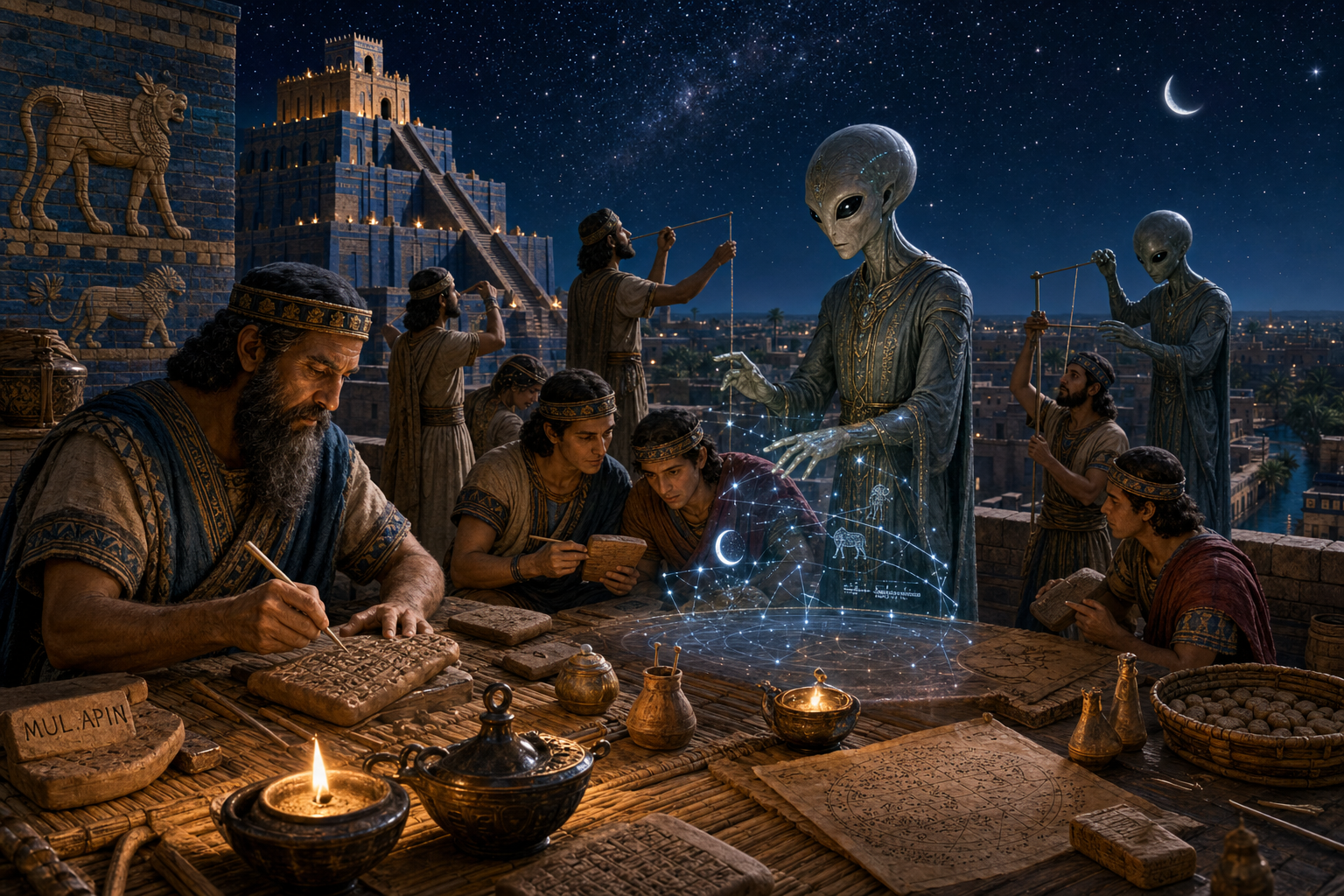
Clay tablets with early cuneiform star catalogs, astronomical diaries, and mathematical tables.
Ancient Aliens — Babylonian-Astronomy Metadata
Entry
- Scene slug:
Babylonian-Astronomy - Historical scene: Babylonian astronomy and star cataloging
- Civilization/culture: Neo-Babylonian / Chaldean Empire
- Approximate date range: c. 7th-6th century BCE
- Location: Babylon, Mesopotamia (modern Hillah, Iraq)
- Saved image path:
My-Library/Images/Collections/Ancient-Aliens/Images/Ancient-Aliens_Babylonian-Astronomy.png - Generation date: 2026-05-12
- Generation mode: Built-in image generation tool via Codex imagegen skill
Historical Details Used
- Clay tablets with early cuneiform star catalogs, astronomical diaries, and mathematical tables.
- Ziggurat observatories, temple towers (Etemenanki) rising above Babylon's walls.
- Scribes and astronomers at night using sight-tubes, water clocks (clepsydras), and astrolabes.
- Material culture: blue-glazed brickwork of the Ishtar Gate and date palm landscapes.
Fiction Boundary
This image is speculative alternate-history art. The alien visitors, hovering tools, and star-map/hydraulic/geometric projections are fictional visual elements. The scene should not be interpreted as a factual claim that aliens created or directed the achievements of Neo-Babylonian / Chaldean Empire. Human builders, scholars, artisans, and administrators remain active, skilled, and central.
Sources
- worldhistory.org - https://www.worldhistory.org/Babylonian_Astronomy/
- britannica.com - https://www.britannica.com/topic/Babylonian-astronomy
Final Prompt Used
Use case: illustration-story
Asset type: speculative ancient-history image collection entry
Primary request: Create a detailed cinematic illustration for the Ancient Aliens "Babylonian-Astronomy" scene, showing Neo-Babylonian / Chaldean Empire during Babylonian astronomy and star cataloging, with fictional ancient alien visitors respectfully interacting with and assisting the people in the scene.

Historical setting: Babylon, Mesopotamia (modern Hillah, Iraq), approximately c. 7th-6th century BCE. Show historically grounded architecture, clothing, tools, materials, landscape, art motifs, and daily activity based on research: Clay tablets with early cuneiform star catalogs, astronomical diaries, and mathematical tables. Ziggurat observatories, temple towers (Etemenanki) rising above Babylon's walls. Scribes and astronomers at night using sight-tubes, water clocks (clepsydras), and astrolabes. Material culture: blue-glazed brickwork of the Ishtar Gate and date palm landscapes..

Alien interaction: show the alien visitors Projecting a soft glowing astronomical star map to align with clay diaries, helping catalog celestial movements., integrated into the human activity without replacing human skill or agency. The mood should be wondrous, collaborative, and mysterious rather than frightening.

Scene/backdrop: Babylonian astronomy and star cataloging at Babylon, Mesopotamia (modern Hillah, Iraq), showing workers, artisans, builders, and observers in their lived-in environment.

Subject: combine these visual elements into one unified scene: Clay tablets with early cuneiform star catalogs, astronomical diaries, and mathematical tables. Ziggurat observatories, temple towers (Etemenanki) rising above Babylon's walls. Scribes and astronomers at night using sight-tubes, water clocks (clepsydras), and astrolabes. Material culture: blue-glazed brickwork of the Ishtar Gate and date palm landscapes., and respectful alien visitors standing beside human experts.

Style/medium: detailed cinematic editorial illustration, polished digital painting, rich historical textures, expressive human figures, subtle luminous alien technology, realistic ancient materials, dramatic but readable lighting, magazine-quality fantasy history art.

Composition/framing: wide landscape image, one unified scene rather than separate panels. Use foreground human activity, midground alien interaction, and background architecture or landscape.

Lighting/mood: warm natural lighting appropriate to the setting with soft alien glow as an accent; awe, concentration, cooperation, and discovery.

Color palette: varied and historically grounded, based on stone, clay, bronze, textile dyes, vegetation, sky, firelight, and alien glow as an accent.

Text constraints: no modern signage, no long captions, no fake paragraphs. Any visible text should be short, high-contrast, and correctly spelled in ancient-style script.

Avoid: claiming the alien premise is factual, making humans passive or primitive, demeaning cultural caricature, horror, abduction imagery, gore, photorealistic modern celebrities, copyrighted characters, modern logos, disconnected symbol collage, unreadable tiny labels, and generic stock sci-fi.
QA Notes
- Historical civilization and setting are visually legible as an ancient Neo-Babylonian / Chaldean Empire scene.
- Alien interaction is collaborative, non-threatening, and respectful of human agency.
- Human workers, builders, and experts remain active and central.
- The image is a cohesive landscape scene, not a panel grid or symbol collage.
- Filename matches
Ancient-Aliens_Babylonian-Astronomy.png.
More from Image Collections

Internet Culture Timeline — 2025
2025-01-01

Music Yearbooks — 2025
2025-01-01

News & Culture — 2025
2025-01-01

NFL Super Bowls — 2025
2025-01-01

Science Breakthroughs — 2025
2025-01-01
Transportation & Mobility — 2025
2025-01-01

Video Game History — 2025
2025-01-01

Internet Culture Timeline — 2024
2024-01-01

Music Yearbooks — 2024
2024-01-01
News & Culture — 2024
2024-01-01

NFL Super Bowls — 2024
2024-01-01

Science Breakthroughs — 2024
2024-01-01