Bánh Xèo (Vietnamese Sizzling Crepes)
Bánh xèo takes its name from the sizzle the rice batter makes when it hits a hot pan.
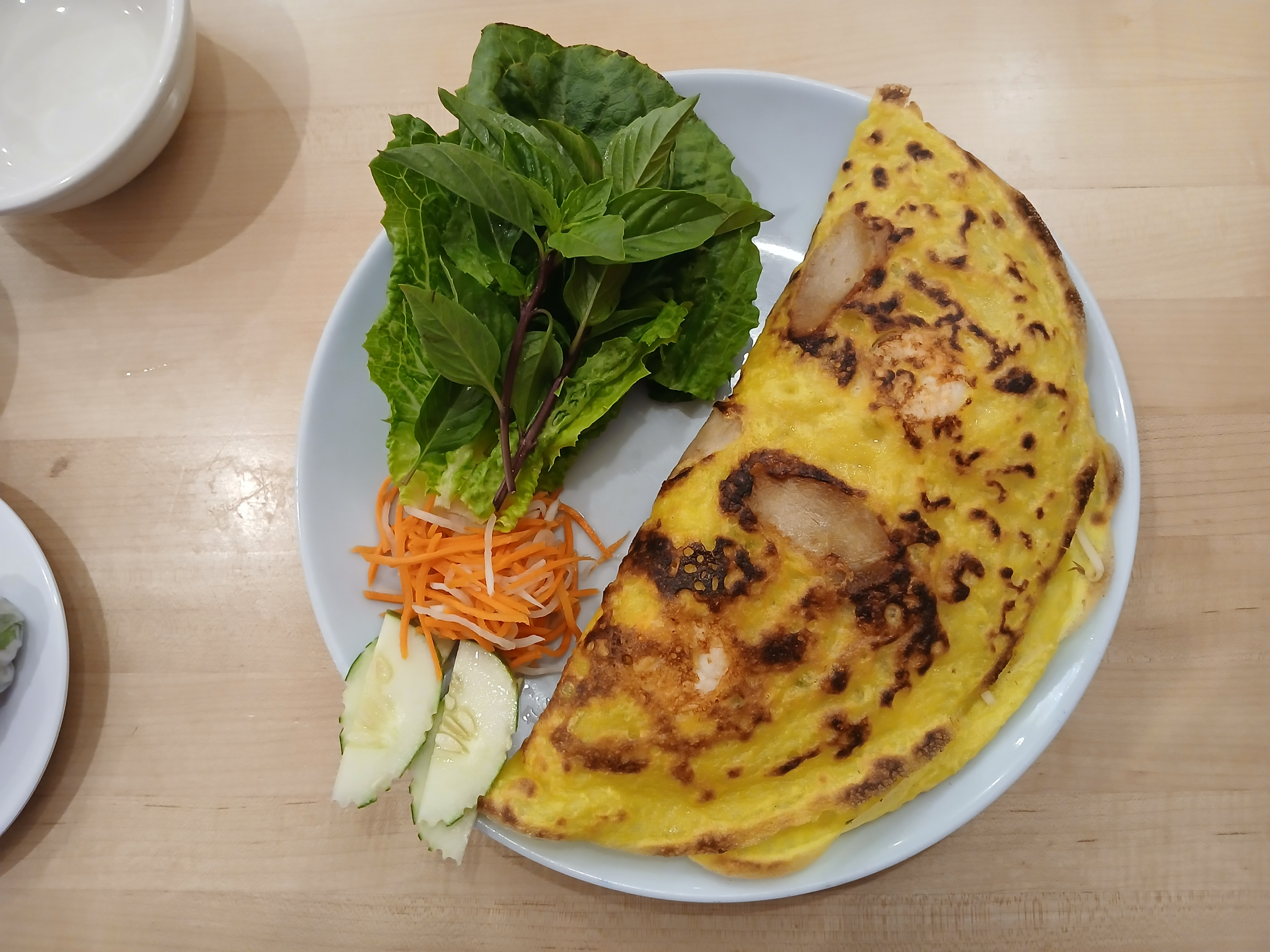
Bánh Xèo (Vietnamese Sizzling Crepes)
Cultural Context
Bánh xèo takes its name from the sizzle the rice batter makes when it hits a hot pan. Versions differ across Vietnam; this recipe follows the large, thin southern style associated with Saigon and the Mekong Delta, where coconut milk is common in the batter. The crisp crepes are torn into pieces, wrapped in lettuce and herbs, and dipped in nước chấm.
Ingredients
Rice Crepe Batter
- 280 g (10 oz / 2 cups) regular rice flour, not glutinous rice flour
- 120 ml (4 fl oz / 1/2 cup) unsweetened coconut milk
- 550 ml (18 1/2 fl oz / 2 1/3 cups) cold water
- 1 1/2 teaspoons ground turmeric
- 1 teaspoon granulated sugar
- 1/2 teaspoon fine salt
- 3 scallions, thinly sliced
Pork and Shrimp Filling
- 115 g (4 oz) boneless pork shoulder, sliced across the grain into very thin bite-size pieces
- 225 g (8 oz) medium raw shrimp, peeled and deveined
- 1/2 small yellow onion, thinly sliced
- 400 g (14 oz / about 4 cups) mung bean sprouts, rinsed and dried
- 60 ml (2 fl oz / 1/4 cup) neutral high-heat oil, such as canola, plus more if needed
Nước Chấm and Table Salad
- 3 tablespoons granulated sugar
- 180 ml (6 fl oz / 3/4 cup) warm water
- 3 tablespoons fresh lime juice
- 3 tablespoons fish sauce
- 1 garlic clove, finely minced
- 1 Thai bird chile, thinly sliced, or 1/2 serrano chile (optional)
- 2 tablespoons finely shredded carrot (optional)
- 1 head butter lettuce or green leaf lettuce, leaves separated, washed, and dried
- 1 small cucumber, thinly sliced
- 1 packed cup mixed fresh mint, Thai basil, cilantro, and Vietnamese coriander sprigs
Substitutions:
- Pork shoulder → pork belly for a richer southern-style filling
- Thai basil or Vietnamese coriander → use more mint and cilantro if those herbs are unavailable
- Coconut milk → replace with the same amount of cold water for a lighter, less distinctly southern crepe
Equipment
- 30 cm (12-inch) nonstick skillet with a lid
- Mixing bowls and whisk
- Instant-read thermometer
- Wide flexible spatula
- Wire rack
Instructions
Preparation (Active time: 25 min)
Mix the batter: Whisk the rice flour, coconut milk, cold water, turmeric, sugar, and salt until smooth. The batter should pour easily and resemble light cream. Let it rest for 30 minutes, then whisk again and stir in the scallions.
Make the nước chấm: Stir the sugar into the warm water until dissolved. Add the lime juice, fish sauce, garlic, chile, and carrot. Let the sauce stand for at least 10 minutes while you prepare the filling.
Set the table salad: Arrange the lettuce, cucumber, and herbs on a platter. Keep the greens chilled until the crepes are ready.
Cooking (Active time: 20 min)
Cook the filling: Heat 1 tablespoon oil in the skillet over medium-high heat. Add the pork and onion and stir-fry for 2 to 3 minutes. Add the shrimp and cook for 1 to 2 minutes more, until the shrimp are pearly and opaque and the pork reaches 145°F (63°C). Rest the pork for 3 minutes, then transfer the filling to a clean plate. Divide it roughly into 4 portions.
Pour the first crepe: Wipe the skillet clean and heat it over medium-high heat. Add 2 teaspoons oil and swirl to coat. Whisk the batter, pour in about 160 ml (2/3 cup), and immediately tilt the pan so the batter runs into a thin, even layer. It should sizzle on contact.
Fill and crisp: Scatter 1 portion of the cooked pork-shrimp mixture over one half of the crepe and add about 1 cup bean sprouts. Cover, reduce the heat to medium, and cook for 3 minutes. Uncover and cook for another 2 to 4 minutes, until the underside is deep golden, the edges lift from the pan, and the crepe feels crisp rather than soft. Do not flip it.
Assembly & Finishing
Fold the crepe: Fold the unfilled half over the filling. Slide the crepe onto a wire rack so steam does not soften it. Repeat with the remaining oil, batter, filling, and bean sprouts, whisking the batter before each pour.
Serve at once: Set the hot crepes beside the table salad and nước chấm. Tear off a piece of crepe, wrap it in lettuce with cucumber and herbs, and dip it in the sauce.
Food Safety & Storage
- Minimum safe internal temperature: Cook whole-cut pork to 145°F (63°C), then rest it for 3 minutes. Cook shrimp until pearly and opaque.
- Cross-contamination: Use a clean plate and utensils for the cooked filling; wash hands, the cutting board, and tools after contact with raw pork or shrimp.
- Storage: Refrigerate cooked crepes and filling in separate shallow airtight containers within 2 hours. Keep for up to 3 days. Refrigerate nước chấm for up to 1 week and fresh herbs for up to 2 days.
- Freezing: Not recommended; the bean sprouts and rice crepe lose their crisp texture.
- Reheating: Reheat crepes in a lightly oiled skillet over medium heat until crisp and the filling reaches 165°F (74°C). Do not reheat with the fresh herbs or lettuce.
Serving Suggestions
- Serve with plenty of lettuce, cucumber, mint, Thai basil, cilantro, and Vietnamese coriander.
- Add quick-pickled carrot and daikon or softened rice paper wrappers to the table if desired.
- Traditionally, diners tear and wrap their own pieces rather than cutting the crepe into neat wedges.
Scaling Notes
Half recipe (1/2×): Make 2 crepes. Use the same skillet and cooking times; halve the batter, filling, sauce, and salad quantities.
Double recipe (2×): Keep the batter chilled and use 2 skillets if possible. Hold finished crepes on wire racks in a 200°F (95°C) oven for no more than 20 minutes so they stay crisp.
Chef's Notes
- Sourcing: Regular rice flour gives the proper brittle shell; glutinous rice flour will make the crepes chewy. Look for fish sauce with fish, salt, and water near the top of the ingredient list.
- Make-ahead: Mix the batter and nước chấm up to 1 day ahead and refrigerate. Bring the batter back to a pourable consistency with a splash of cold water, if needed, and add the scallions just before cooking.
- Variations: Central Vietnamese bánh xèo are generally smaller and thicker. Southern versions often include coconut milk and may use pork belly instead of shoulder.
- Common pitfalls: A cool pan makes a pale, oily crepe. Let the pan heat fully, use a thin film of oil, whisk before every pour, and cool each finished crepe on a rack rather than stacking them.
- Nutrition note: Fish sauce makes the dipping sauce salty. The estimate below assumes each diner consumes one-quarter of the sauce; using less sauce lowers the sodium.
Nutrition Information (Optional)
Per serving: approximately 610 kcal
- Protein: 25g | Fat: 25g | Carbohydrates: 72g | Fiber: 5g
- Sodium: approximately 1,400mg | Saturated fat: approximately 5g | Added sugar: approximately 10g
Sources
- Culinary Institute of America, Mai Pham, "Sizzling Saigon Crepes (Banh Xeo)": https://ciaprochef.com/wp-content/uploads/2024/04/WCA_Vietnam_Recipes.pdf
- SBS Food, Adam Liaw, "Bánh xèo": https://www.sbs.com.au/food/the-cook-up-with-adam-liaw/recipe/banh-xeo/l92q0cn8m
- VnExpress Cooking, Bùi Thủy, "Cách làm bánh xèo miền Tây": https://vnexpress.net/doi-song-cooking-banh-xeo-mien-tay-4654925.html
- Image source: Wikimedia Commons, "Bánh xèo with pork sausage and shrimp served with various garnishes": https://commons.wikimedia.org/wiki/File:B%C3%A1nh_x%C3%A8o_with_pork_sausage_and_shrimp_served_with_various_garnishes.jpg

Version History:
- v1 (2026-10-16): Initial recipe by @Codex
Credits:
- Recipe development: @Codex; synthesized from the Culinary Institute of America/Mai Pham, SBS Food/Adam Liaw, and VnExpress Cooking sources listed above
- Testing: @Codex
- Verification: @Coordinator
- Photography: Ser Amantio di Nicolao, via Wikimedia Commons, licensed CC BY-SA 4.0; no modifications
- Food safety and storage guidance: USDA-aligned temperature and leftover practices
Recipe Location: /Recipes/vietnamese/vietnamese_banh-xeo_v1.md
Images Location: /Images/banh-xeo/
More from Recipes