Scorchline
Design brief
Swap gems to clear lines, but the heat meter pays out more the longer you dare to let it climb.
Date: 2026-10-15 Genre: match-3 Platform: Mobile (portrait, touch-first) Status: Playable build
Concept
Scorchline is a swap-match game built around one bad habit: waiting. Every second you don't clear a line, the heat meter climbs, and every match you make pays out a multiplier based on exactly how hot the board is at that instant. Clear early and you're safe but cheap. Let it run close to the edge and the same three-in-a-row is worth double. Miss your window and you lose a heart. The game is built on that tension, not on finding matches, which stops mattering after the first ten seconds.
How to play
Drag a gem onto a neighboring gem (up, down, left, or right) to swap them; if the swap lines up three or more of the same gem, they clear and the row above falls to fill the gap. On a trackpad or mouse, click and drag the same way. Keyboard players move a cursor with the arrow keys, press Space to pick a gem up, move the cursor onto a neighbor, and press Space again to swap. Three hearts, shown top right, are all you get — the board doesn't end the run, the heat meter does.
Core mechanics
- Heat meter: climbs on its own while you're deciding. Clearing a line drops it back down; letting it hit the top costs a heart and resets it to half.
- Heat payout: your score for a match is scaled by how full the meter was the moment it cleared — a match made at 90% heat is worth close to double one made at 10%.
- Cascade chaining: if clearing one line drops new gems into place and that drop causes another match, the chain keeps going and each link adds to a multiplier that resets the next time you make a fresh swap.
- Frozen gems: ice-locked tiles drift onto the board as the score climbs. They can't be swapped directly, but a match cleared next to one chips off a layer; two hits and it thaws into a normal playable gem. Leave too many frozen and the board gets cramped.
- Auto-reshuffle: if the board ever runs dry of legal moves, it quietly reshuffles the unlocked gems rather than stranding you.
Progression & scoring
There's no level screen — the pressure ramps with your own score. Every 400 points, the heat meter ticks faster and frozen gems spawn more often, so a run that starts at a comfortable simmer is sprinting by the three-minute mark. Score comes from three multiplied sources: line size (bigger matches pay more), cascade depth (chained matches stack), and heat timing (the real score driver, and the only one that's a choice rather than luck).
Look & feel
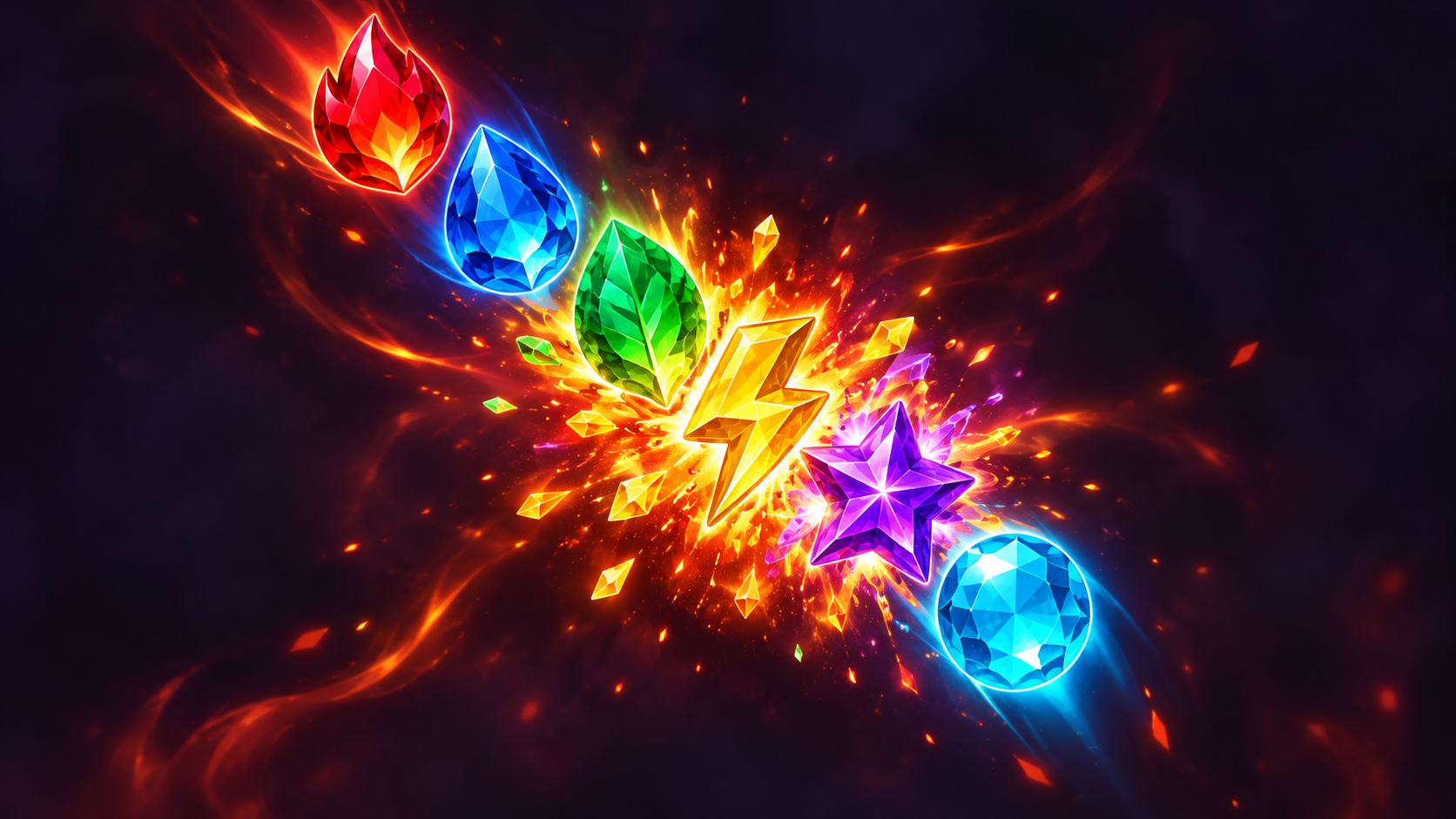
Six gem types — flame, droplet, leaf, bolt, spark, and gem glyphs — sit on a dark, warm-lit board inside an on-screen phone frame with a rounded bezel and notch, so the whole thing reads as something you'd hold in one hand. The heat bar runs green to amber to red along the top, and a match cleared deep in the red flashes a warmer gold pop-up instead of the usual pale one, so you can feel the payout before you read the number. All of it, including swap clicks, match chimes, the overheat warning growl, and the shatter crack when ice breaks, comes from a few oscillators built with the WebAudio API — no sound files, same as the gems and board, which are all canvas drawing.
What makes it fun
- The loop forces an actual decision every few seconds: clear now for a safe, small score, or let the meter climb one more tick for a bigger payout and the risk of losing a heart. That's a real bet, not a theme.
- Frozen gems compete for your attention against the heat clock — you can spend a move thawing one out for later breathing room, or ignore it and keep chasing heat-timed matches, and either choice has a cost.
- The difficulty ramp isn't one dial turned up; the clock speeds up and the clutter grows independently, so a run that handled a fast meter can still get buried by ice if you never cleared any.