Rune Recall
Design brief
Flip glyph pairs before the clock burns down, but every wrong guess scrambles the board and erases what you memorized.
Date: 2026-08-12 Genre: memory card match Status: Playable build
Concept
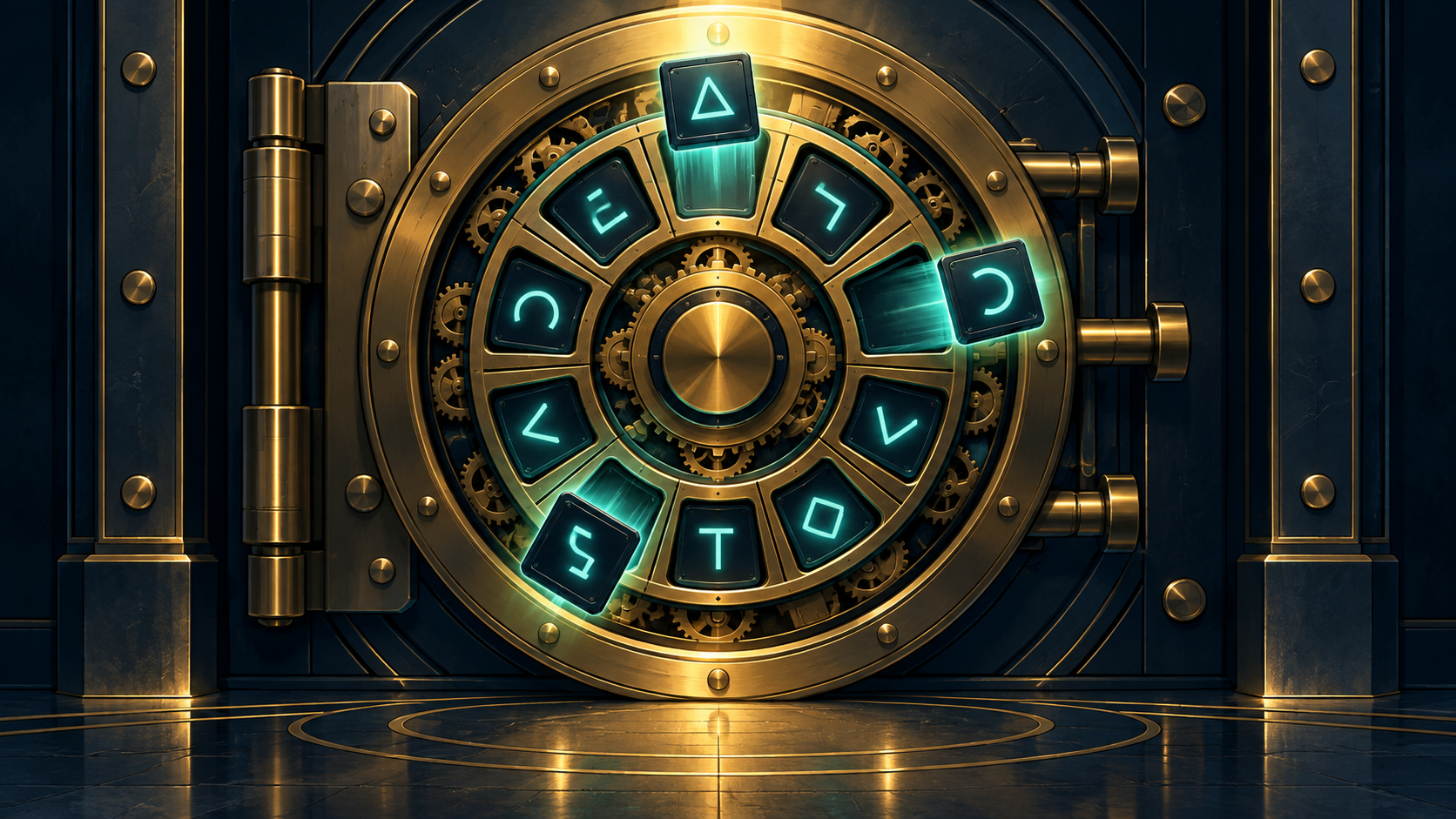
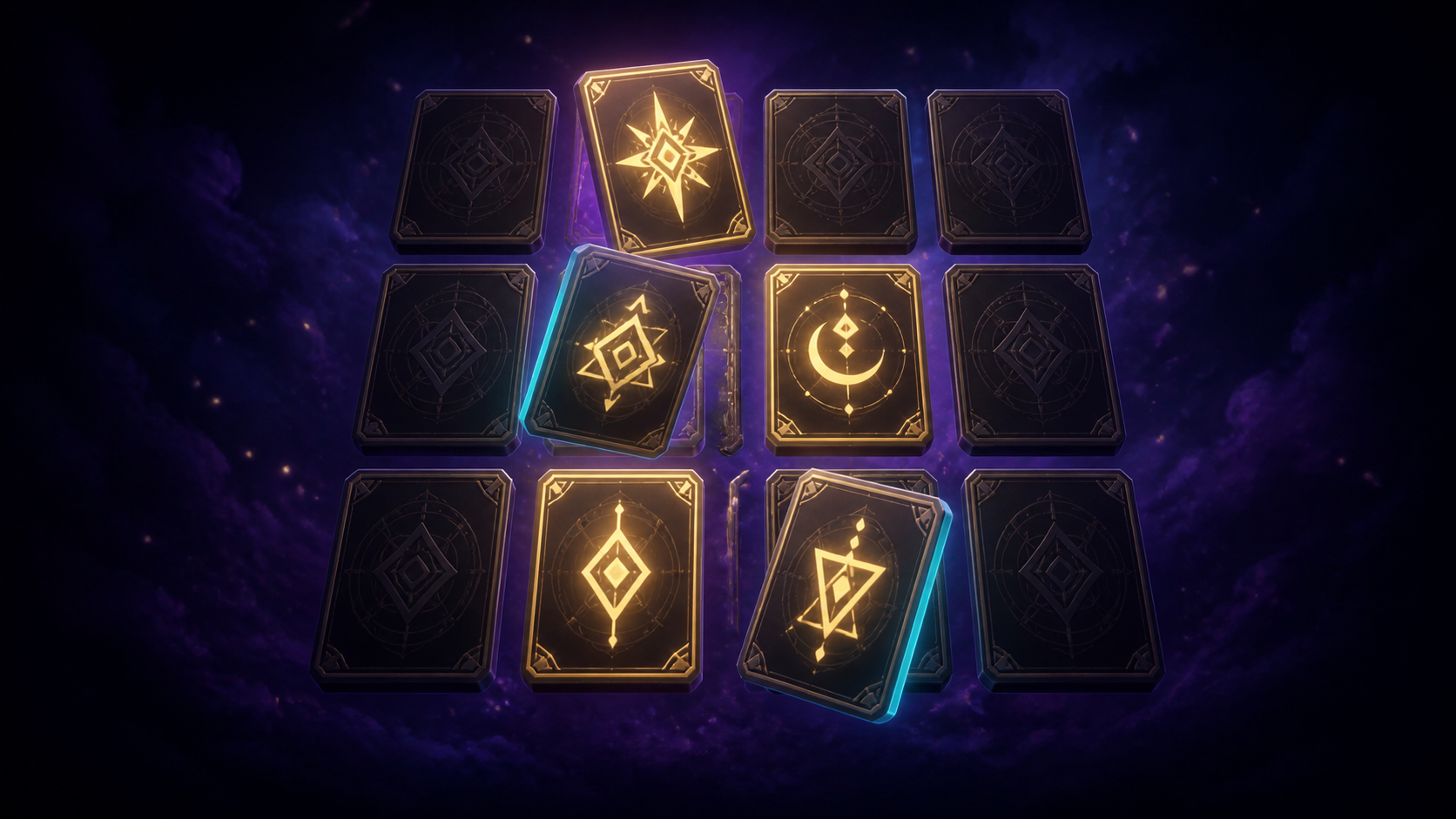
Rune Recall is a straight memory-match game with one twist: the board doesn't sit still. Miss a pair and the unmatched tiles reshuffle their positions, so the mental map you built gets wiped and you're memorizing blind again. It's built for the player who finds memory match too passive — this version punishes guessing and rewards actually tracking where things are.
How to play
Study the grid during the brief memorize window at the start of each level, then flip two tiles at a time to find matching glyphs. Click or tap a tile to flip it, or use the arrow keys to move the highlighted cursor and Space/Enter to flip. Clear every pair before the timer runs out to advance. Three misses (two on later levels) trigger a chaos shuffle that reassigns every unmatched tile to a new spot. Press R to restart anytime, M to mute.
Core mechanics
- Two-tile flip and compare — pick two tiles, the game holds them face up for a beat so you can see whether they match
- Chaos shuffle — after enough consecutive misses, every still-hidden tile jumps to a new position, forcing you to relearn the board mid-level
- Combo streak — matching without missing raises a score multiplier up to 2.5x; one wrong guess drops it back to 1x
- A single, timed memorize window per level that shrinks as you advance, instead of unlimited peeking
Progression & scoring
Each level adds pressure on three separate fronts instead of one number climbing. The memorize window shrinks from 3 seconds down toward about 1.1. The grid grows from 4x4 up to a capped 6x6. The miss penalty — time knocked off the clock — climbs while the shuffle trigger gets more sensitive, from every third miss down to every second. Matches score 100 points times the current combo multiplier; clearing a level banks a time bonus plus a flat per-level bonus. Best score is saved locally, so there's always a number to beat.
Look & feel
A deep indigo and violet backdrop with drifting glyph-dust particles, gold accents on matched tiles and score text, and a teal cursor ring for keyboard play. Tiles use plain rune-like Unicode symbols rather than emoji, so the pairs read as engraved sigils instead of clip art. All sound is synthesized on the fly with WebAudio: a soft tick on flip, a rising two-note chime on a match, a harsh downward buzz on a miss, and a low double-thud when the board shuffles.
What makes it fun
- The shuffle turns a board you'd already solved in your head back into a mystery at the worst possible moment — watching your own mental map go stale while the clock keeps running is the real source of tension, not the countdown itself
- Because the penalty is spatial rather than just a time hit, the game rewards actually building a picture of the grid instead of brute-forcing pairs by trial and error
- The combo multiplier gives you a reason to keep playing clean even after a level is basically won, since a flawless run banks more than just finishing it